Views
Views are short interpretive historical presentations from materials in the Railroads collection. Each View is aimed a research question or problem and assembles information from multiple sources: documents, lists, records, orginal maps, and other historical sources. Rather than using traditional footnotes or citations, these Views contain direct links and references to relevant sources used in their assembly. Views are "assemblages" of data and interpretation and should be considered multimedia experiments in the presentation of digital history.

The Great Railway Strike of 1877 and Newspaper Coverage
The Great Strike of 1877 raised questions about the nature of modern American society and its increasingly interdependent and networked economy. Americans wondered if the railroads that had been such a part of the modern nation's sectional crisis and figured so prominently in its triumph were now also its greatest weakness, a network that no longer unified but exposed the nation. Newspaper editors shaped coverage of the events with explosive headlines, focused stories, and politically charged editorials about the strike. Their language and detailed descriptions captured the intensity and personal struggle among the workers and middle-class Americans viewing these events with alarm.
Railroad Workers and Railroad Work
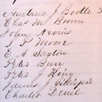
In the 1850s railroads hired thousands of working people to build and operate their growing lines. In 1857 the Baltimore and Ohio Railroad recorded every employee on the line. Over 6,000 individuals worked for the B & O in a variety of roles. At least one woman was employed by the company, Sarah Mally, as well as many free blacks and Irish immigrants. Our database will track these individuals over time and in coming months we will add more data from different railroads on slave laborers, Irish, and other workers. By Richard G. Healey, Katie Dooley, and William G. Thomas
Strikes, Blacklists, and Dismissals--Railroad Workers' Spatial History on the Great Plains
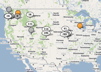
Beginning in the 1880s railroad companies began compiling blacklists of employees dismissed for cause. During the turbulent stirkes in 1886 and 1888, western railroads began sharing these lists so that an employee dismissed on one road might not be hired on another. This map represents over 1,000 Union Pacific dismissals, by their location and cause. By Leslie Working, Richard G. Healey, and William G. Thomas.